
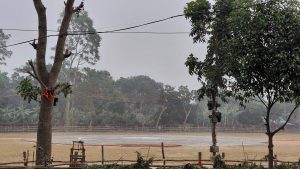
Taherpur, Dec. 20: The Bharatiya Janata Party’s meticulously calibrated electoral offensive in West Bengal, designed to be spearheaded by Prime Minister Narendra Modi following the Special Intensive Revision (SIR) of electoral rolls, encountered immediate turbulence on Saturday. A thick blanket of poor visibility prevented the Prime Minister’s helicopter from landing at the designated rally venue in Taherpur, Nadia, forcing a retreat to Calcutta and depriving the party of a vital psychological bridge to the Matua community at a moment of profound existential crisis.
The aborted landing was more than a logistical failure; it was a missed opportunity to soothe a community currently gripped by the fear of disenfranchisement. As the SIR exercise progresses, a significant swathe of the Matua population—impoverished Hindu refugees from Bangladesh—finds itself unable to establish the requisite parental or personal links to the 2002 voters’ list. For many, the prospect of being purged from the rolls is no longer a distant anxiety but a looming reality.
Modi’s physical absence created a palpable vacuum. The disappointment among the gathered thousands was sharpened by the lack of any immediate, substantive assurance regarding their electoral future, leaving a community that views the right to vote as its primary shield feeling dangerously exposed. By evening, this unease curdled into agitation.
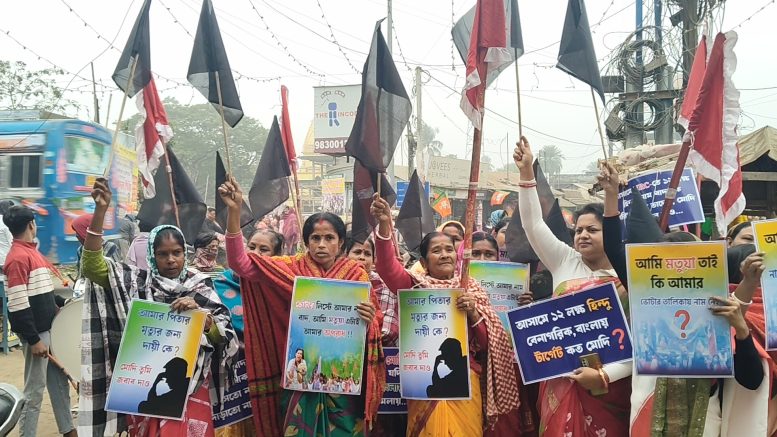
 At Badkulla railway station, groups of Matuas staged a demonstration, demanding clarity from the BJP leadership. The sentiment was echoed by Supratik Biswas, who travelled from Hanskhali only to find himself in “despair” after the Prime Minister’s virtual address failed to mention the threat to their voting rights. In the community’s nerve centre of Thakurnagar, Hira Malik, a tea vendor who watched the proceedings on his phone, remarked gloomily that the silence felt deliberate.
Sensing the shifting tide, the Prime Minister later took to social media to offer a digital olive branch. Promising that the Matua and Namasudra families would be protected once a BJP government assumed power in the state, he asserted that the Citizenship (Amendment) Act (CAA) ensured their right to live with dignity. “They are not here at the mercy of the Trinamool Congress,” he wrote, attempting to redirect the narrative of fear toward the ruling state party.
However, the political math remains precarious. While the BJP had previously suggested that CAA applications would act as a buffer against name-deletion during the roll revision, a recent Supreme Court clarification—stating that voting rights are contingent upon the formal acquisition of citizenship—has undermined that position. This legal reality has left the BJP’s Bengal unit in an uncomfortable defensive crouch, as they had looked to Modi to provide a roadmap out of this constitutional impasse.
During his brief recorded address, the Prime Minister stuck to a safer, more hallowed script. He paid homage to the spiritual lineages of Shri Harichand Thakur and Guruchand Thakur, and the matriarch Binapani Devi, praising the community’s “path of karma.” He accused the Trinamool Congress of orchestrating a campaign of “panic” through a false narrative on citizenship. Yet, the high-level rhetoric did little to mask the concern within his own ranks. Sukanta Majumdar, the BJP’s state president, admitted the day was “painful,” noting that the expectations for the visit had been immense.
The Matua vote was the engine behind the BJP’s 2019 surge and its 2021 resilience in nearly 20 Assembly constituencies across the 24 Parganas and Nadia. Today, that foundation shows signs of erosion. While Subrata Thakur, a BJP MLA and Matua leader, dismissed the fears as “exaggerated,” insisting that the Election Commission’s prescribed documents would protect the majority, the opposition was quick to capitalize. Sukesh Chowdhury of the Trinamool-backed Matua Mahasangha described the situation as a “planned conspiracy” to deport refugees who arrived with nothing, labelling the BJP’s silence as a betrayal of the poor.
Beyond the political theatre, the day did see the formal inauguration of infrastructure projects. After his helicopter returned to Dum Dum airport, the Prime Minister virtually laid the foundation stones for National Highway projects worth ₹3,200 crore, including the crucial four-laning of the Barajaguli–Krishnanagar stretch of NH-34. These projects, Modi noted, would shave two hours off the journey between Calcutta and Siliguri. But in the heart of the Matua belt, the focus remained not on the speed of the roads, but on the security of the ballot.